|

Rewriting the 3D rules
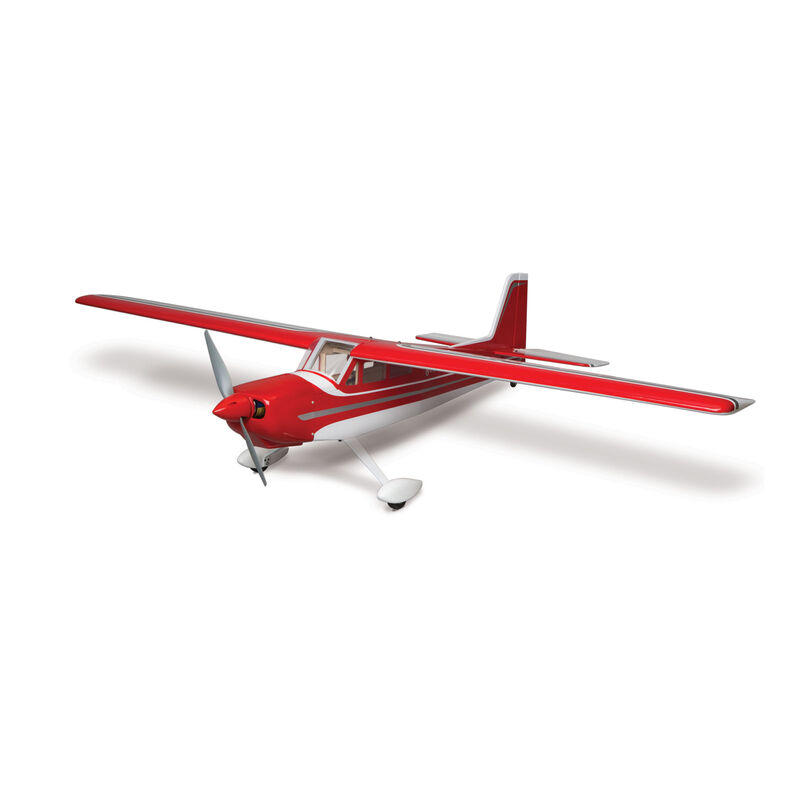
An axiom in RC flying states that “bigger flies better.” With the Funtana
S .40 ARF, Hangar 9 has proven that a well-built and -engineered .40-size
plane can be just as stable and responsive as a much larger model.
Hangar 9 has built a reputation for high-quality ARFs, and the Funtana
is no exception. From the simple and attractive UltraCote covering to
the included fiberglass wheel pants and cowl, Hangar 9 has yet another
winner. There has been a lot of buzz on the Internet about this aircraft
and its abilities, so let’s take a closer look.
 |
Inside the box
First, inspect the components. The box has foam inserts to prevent the
parts from shifting during shipment, and inside, everything is poly-bagged.
The manual is well laid out and organized and includes many helpful diagrams
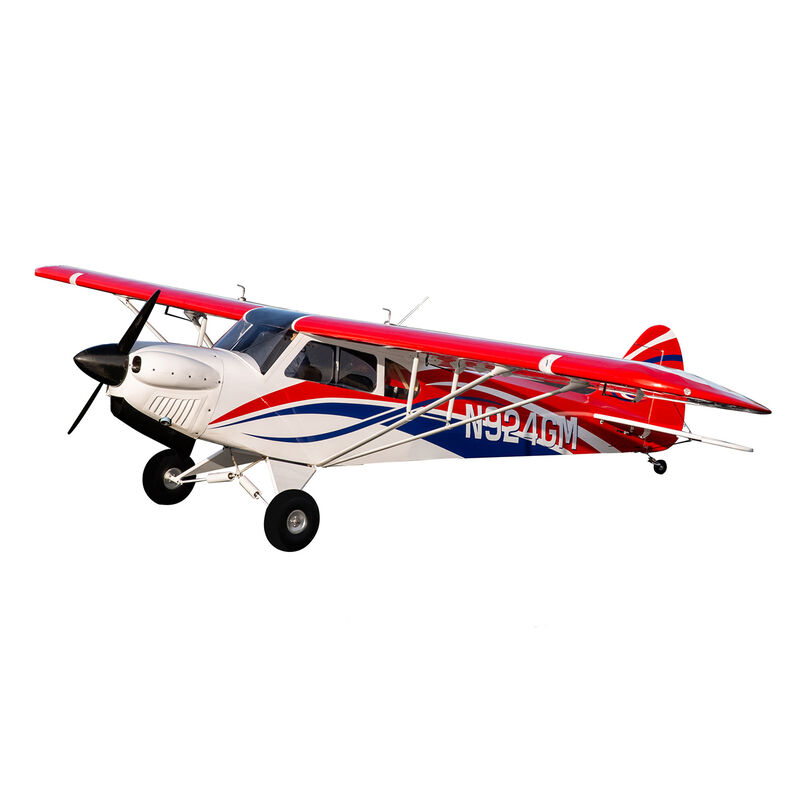
and pictures. The Funtana is covered in UltraCote, and the fiberglass
parts are painted to match the covering. The kit includes a full set of
hardware, pushrods, wheels, a fuel tank and a tinted canopy. You’ll need
to supply the usual building tools and adhesives to put the Funtana together.
| SPECIFICATIONS |
|
Model: Funtana S .40 3D ARF
Manufacturer: Hangar 9
Distributor: Horizon Hobby Inc.
Type: 3D fun-fly
Wingspan: 56 in.
Length: 56 in.
Wing area: 714 sq. in.
Weight: 5 lb. 8 oz.
Wing loading: 17.7 oz./sq. ft.
Radio req’d: 4-channel with 5 servos
Radio used: JR XP8103 transmitter, 3 Hitec HS-605 (ailerons
[2] and rudder), Hitec HS-525MG (elevator), Hitec HS-81 (throttle)
servos
Engine req’d: .32 to .46 2-stroke, or .40 to .72 4-stroke
Engine used: Saito FA-72 4-stroke
Prop used: Pro Zinger 13x6 and APC 13x6W
 |
Fuel used: Powermaster 20/20 YS Saito blend
Price: $169.99
Features: built from laser-cut balsa and lite-ply parts;
covered with UltraCote; complete hardware package; painted fiberglass
cowl and wheel pants; tinted canopy; detailed instructions; decals.
Comments: its confidence-inspiring control authority and
light wing loading make the Funtana an excellent 3D performer. The
very light wing loading enhances the outstanding aerobatic capabilities,
while the thick airfoil makes slow flight a breeze. In fact, in
a slight breeze, the Funtana can be brought to a virtual standstill
while still flying on the wing. If you’re looking for a fun-fly
type of airplane that can handle just about any maneuver your thumbs
can, this is the airplane to get.
Hits
• Excellent 3D performance.
• Painted fiberglass cowl and wheel pants.
• Easy to assemble.
• Short control linkages make for easy setup and adjustment.
Misses
• Wing not perfectly square with fuselage.
|
Building notes
Wing assembly. As with most ARFs on the market today, assembly
starts with the wing. It comes in one piece, and this greatly speeds up
assembly. First epoxy the wing dowels into place, and then fit the wing
in the fuselage. A single 1/4-20 nylon bolt holds the wing in place. Because
I wanted to really wring this plane out in the air, I replaced the nylon
bolt with a stronger metal bolt for extra security. This is one area where
pilots who want to perform all-out aerobatics can never be too careful.
After I had secured the wing, I aligned and installed the horizontal stabilizer.
Before you do that, make sure that the wing is square to the fuselage.
In my case, the right wingtip was 1/2 inch farther back than the left,
which caused the plane to roll slightly to the right during hard pull-ups.
I discovered this during the flight-testing. To fix the problem, I simply
moved the bolt’s blind nut 1/4 inch to the right to square the wing. To
ensure that the strength of the wing-mounting block wasn’t compromised,
I epoxied a piece of lite-ply to it.
Tail feathers.The horizontal stab slides into a slot in the fuselage,
and carbon-fiber rods that brace the tail group provide a great deal of
strength, which is critical for the punishment that 3D flying subjects
the model to. I installed the stab, making sure that it was square and
parallel with the wing. To install the carbon support rods, you are instructed
to drill a hole 13/8 inches from the tip of the stabilizer and a corresponding
hole in the fuselage. The rods in my kit were too short to allow them
to fully seat in the holes, so I simply relocated the holes in the stab.
I then glued the vertical fin into place and set the fuselage aside.
Now hinge the ailerons with the supplied CA hinges. I pushed a pin through
the center of each of the hinges and slid them into the wing hinge slots,
followed by the ailerons. There should be only a tiny gap between the
wing and the leading edge of the aileron. The ailerons are truly huge
and make up nearly a third of the wing. These large surfaces provide a
lot of maneuverability and agility to the Funtana. When I was satisfied
with their placement, I wicked plenty of thin CA into the hinges to secure
them. When I do this, I have a rag with some CA debonder handy in case
I drip CA somewhere other than where it’s needed. Let the CA cure naturally
(without accelerator); the bond will be stronger.
I laid out the parts needed to install the elevators and rudder. Before
I glued anything into place, I assembled the elevator halves with the
joiner wire on my workbench. This is the perfect time to make any bends
in the joiner wire so that the elevators lie flat and square. I hinged
the elevators to the stab and let them cure, and I installed the tailwheel
assembly. To make the slot for the tailwheel straight and square, I used
my handy little Robart drill jig and then cut the slot in the rear of
the fuselage. I coated the tailwheel wire with petroleum jelly to prevent
it from being glued to the bearing. I hinged the rudder into place and
moved on to the engine installation.
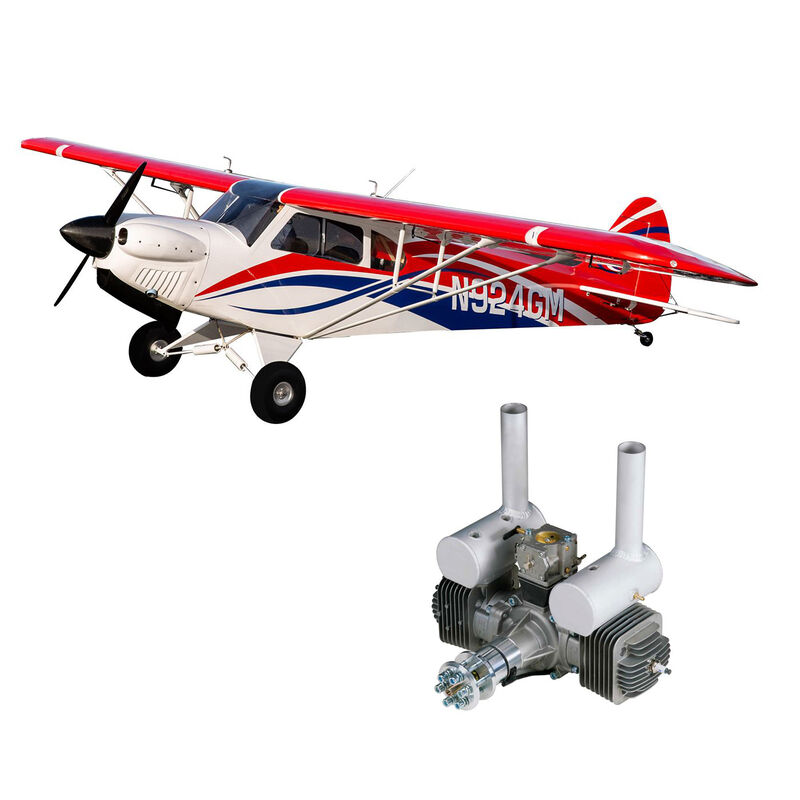
Engine installation. I elected to use the recommended Saito FA-72
4-stroke in this airplane. It has the quick throttle response and torque
to perform the 3D maneuvers the Funtana S was designed for. The Saito
is an excellent match for this plane, and with the proper propeller, it
provides enough power to pull vertically out of a hover and do everything
I want.
The Saito nestles nicely in the engine compartment, and the supplied mount
fits it perfectly. The only quirk I encountered was that the throttle
arm is a little too close to the firewall to allow a straight shot for
the pushrod and clevis. I got around this by making the pushrod a little
longer than called for and making a gentle 180-degree bend; this allowed
the pushrod to be connected to the throttle arm from the front, clearing
the firewall. I installed the provided fuel tank without a hitch.
For those of you who are thinking about powering the Funtana with an electric
motor, an entire section of the manual details its installation. With
a powerful Hacker B-50 10L brushless motor geared 6.7:1 and an 8000mAh
5s4p lithium battery (four parallel 5-cell packs wired in series), this
plane would be amazing and quiet.
 |
 |
| The Saito FA-72 nestles nicely in the
Funtana’s cowl. |
The aileron linkage is a snap to hook
up. |
 |
| The throttle servo, the receiver and its battery
go in the fuselage. |
Cowl and landing gear. For the cowl to fit over the engine, I had to
cut a hole for the valve covers and engine head to poke through. I have
found that the easiest and most accurate way to make the opening is to
tape a piece of card stock to the fuselage with the cowl off and then
trace the location of anything that protrudes through the cowl or that
you need to access (glow plug, needle valve, fuel lines, etc.) onto the
card stock. Remove the engine and put the cowl in place, and transfer
the outlines from the card stock onto the cowl. Use a rotary tool and
cutting bits to make clean cuts in the fiberglass, and wear a good dust
mask.
The landing gear is mounted on the bottom of the fuselage with two screws,
and the wheels are lightweight foam. The fiberglass wheel pants look great,
but I found that I had to add an extra mounting screw to keep them in
place.
|